
A real estate website for a builder has one job: turn a buyer who is comparing several projects into an enquiry or a site visit. Buyers rarely read everything. They look for the same few facts on every project, and they leave quickly if the page is slow or unclear. This guide explains what a builder website should include, how landing pages, social media and ads fit together, and the mistakes that cost enquiries.
Quick answer: what should a real estate builder website include?
At minimum: a separate page for each project (location, configurations, price range, amenities, status), floor plans and photos that load fast on a phone, approval and RERA details that match official records, a short enquiry form with call and WhatsApp buttons, a map and address that match your Google Business Profile, and an about page that shows who is behind the company.
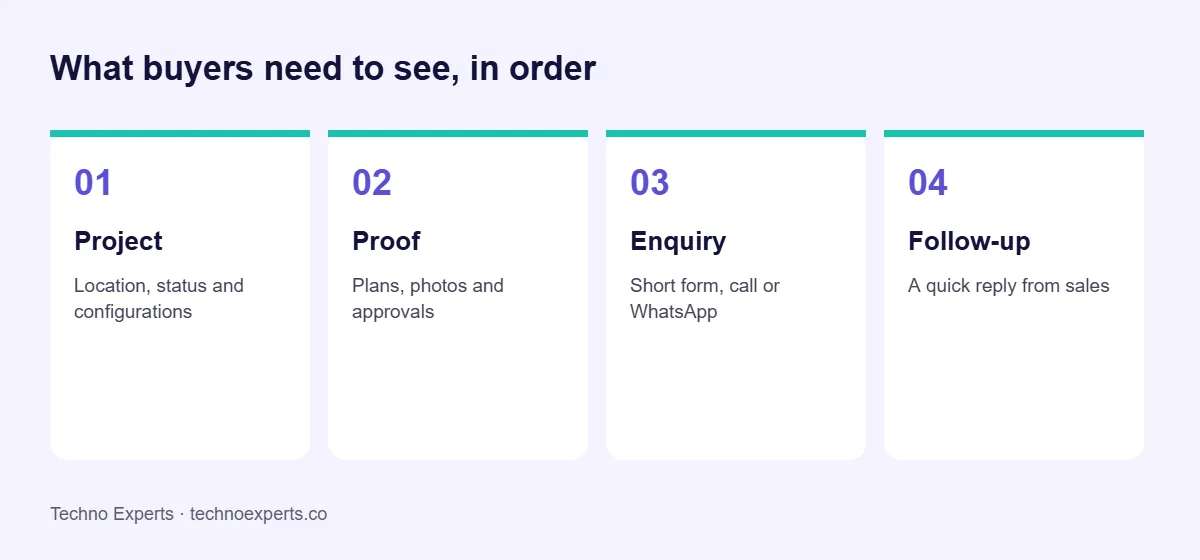
1. A page for every project
Each project needs its own page and its own address on the web. This lets search engines, ads and social posts send buyers to the right place. On each page, show the facts buyers compare:
- Location, with a map and nearby landmarks
- Configurations and size range
- Price range or a clear “price on request” with a quick enquiry route
- Status: upcoming, under construction or ready to move in
- Amenities, written plainly
- Possession timeline, only where you can stand behind it
2. Proof that builds trust
Buying property is a large decision, so buyers look for proof. Show the RERA registration number and approvals exactly as they appear in official records. Add real photos of the site and progress, a short company profile, and the names of the people behind the company. Reviews and completed projects help too, when you can share them.
3. A fast, simple mobile experience
Most first visits to a project happen on a phone, often on mobile data. Heavy sliders, large unoptimised photos and autoplay videos slow the page. Compress images, load videos only when asked, and keep the layout simple. Google also measures page experience through Core Web Vitals, so speed helps both buyers and search visibility.
4. An easy way to enquire
- A short form: name, phone and one optional question
- A visible Call button and a WhatsApp button on every page
- Enquiries sent to your sales team by email or WhatsApp straight away
- A thank-you message that says when you will reply
5. A landing page for every launch
A project page explains. A landing page asks for one action. When someone arrives from an ad or a social post, a focused page with one offer, the key facts and one form works better than a general page. See our guide on what a real estate landing page should include.
How social media and ads support the website
Social media builds familiarity: construction progress, site visit days and handovers show that the project is real. Ads bring new buyers to the landing page. The website answers questions and collects the enquiry. These parts work best when one team plans them together, so the message, design and tracking match across all of them.
Common mistakes on real estate websites
- No separate page for each project
- Heavy images and videos that make pages slow
- Forms that ask too much, or that send enquiries to an inbox nobody checks
- Prices, status or approval details that are out of date
- A website that looks different from the ads and social posts
- No tracking, so you cannot tell which ad or post brought the enquiry
Can a website include tools for builders?
Yes. Beyond project pages, a builder website can include calculators, brochure downloads and report tools. Techno Experts has worked on a report generation tool used with builder projects, and the same approach can be adapted to other needs.
SEO, AEO and GEO: what do they mean?
SEO (search engine optimisation) helps your pages rank in Google. AEO (answer engine optimisation) means writing clear, direct answers that appear as featured answers and voice results. GEO (generative engine optimisation) means making your content easy for AI tools such as ChatGPT, Gemini and Google AI Overviews to read, trust and cite. The same basics help all three: accurate facts, clear structure, named authors and a fast website. Our SEO, AEO and GEO glossary explains each term in more detail.
Frequently asked questions
How many pages should a real estate website have?
At least a home page, a page for each project, an about page, a contact page and a page for each service you offer. Add landing pages for specific campaigns. The right number depends on how many projects you run.
Do I need a separate website for each project?
Not always. Many builders use one company website with a page for each project, and add a separate landing page for each launch. A separate website can make sense for a large project with its own brand.
What is the best way to get enquiries from a real estate website?
Make the form short, add call and WhatsApp buttons, load fast on mobile, and send each enquiry to your sales team at once. Quick replies matter as much as the page.
Does a real estate website help with Google ranking?
A good website supports SEO but does not replace it. Project pages, location content, a complete Google Business Profile and a fast site all help, and results depend on your area and competition.
How long does it take to build a real estate website?
A project website usually takes a few weeks, depending on the number of projects, the content ready and the features needed. We give a clear timeline in the quote.
Talk to a team that has done this
Techno Experts is a web design, SEO and AI company in Warje, Pune. We build websites, landing pages, social media and ad campaigns, and we run SEO, AEO and GEO. See our real estate website services or talk to the team. Or run a free website health check to see what to fix first. We reply within 24 hours.
Written by Suresh Shinde, Techno Experts, Pune. Last reviewed October 2026.